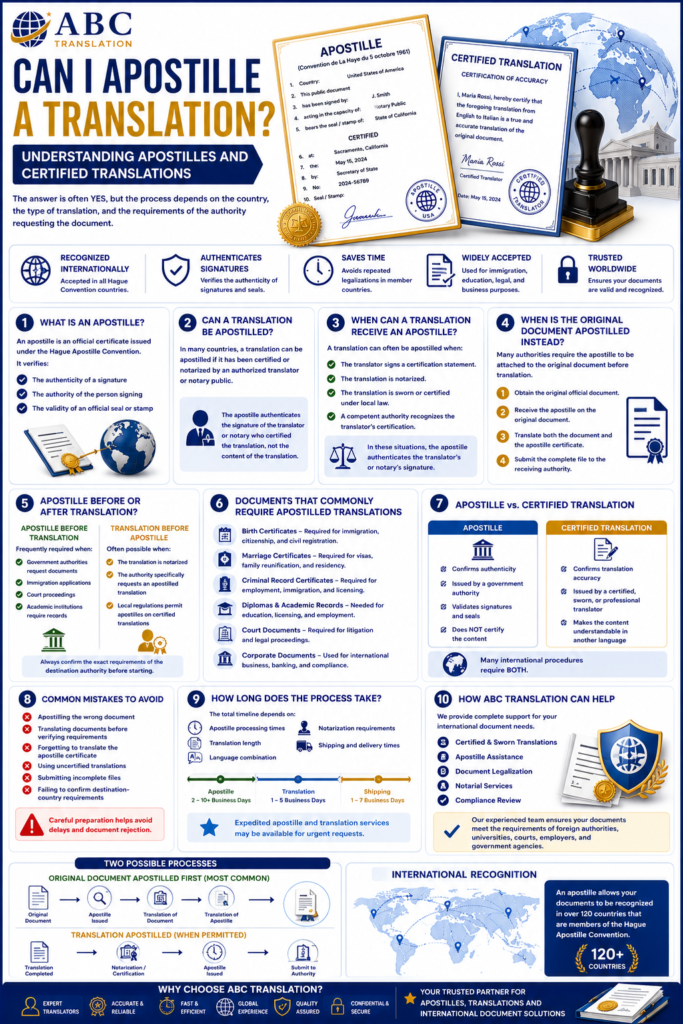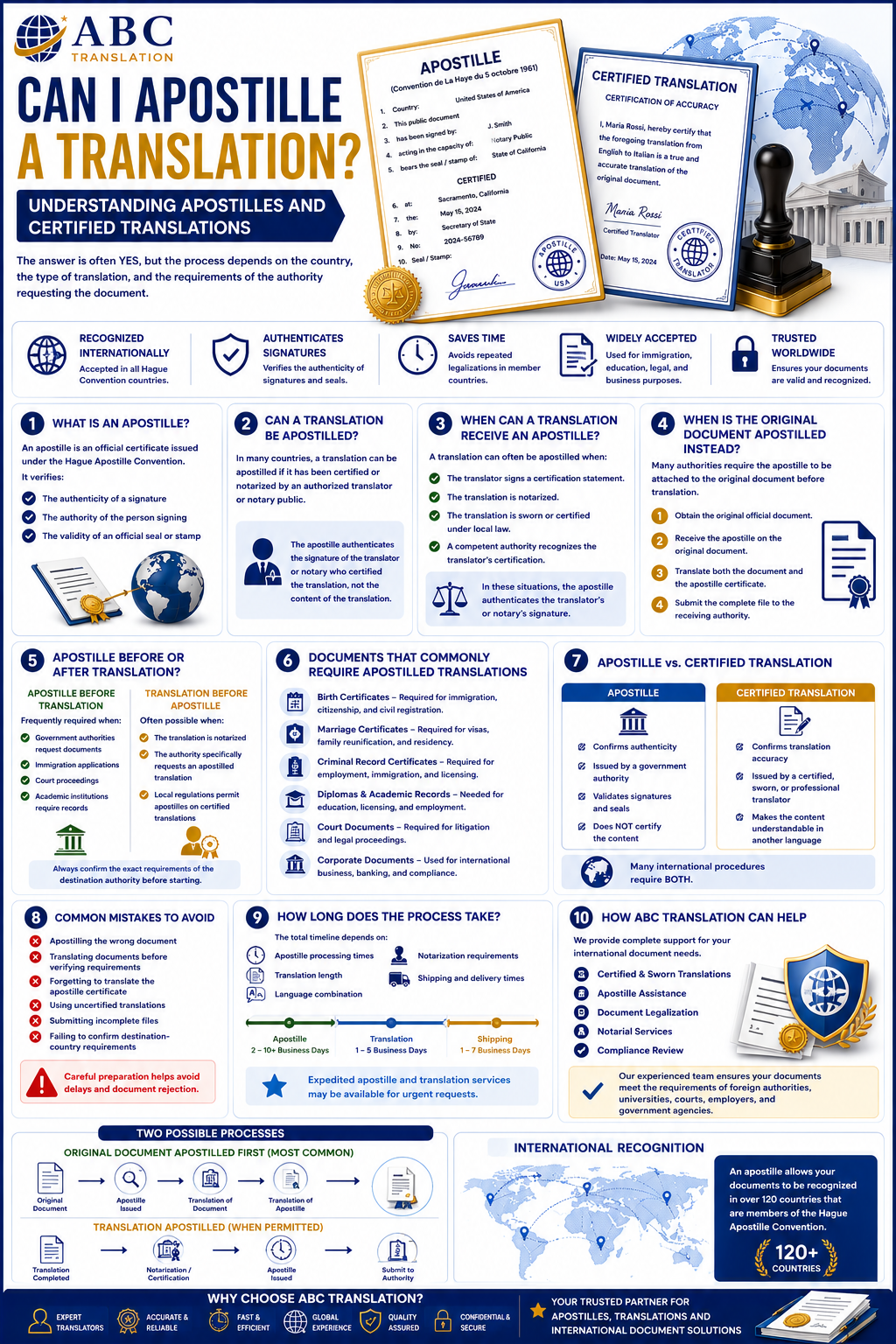
Can I Apostille a Translation?
One of the most common questions people ask when preparing documents for international use is (can I Apostille a Translation?):
“Can I apostille a translation?”
The answer is often yes, but the process depends on the country, the type of translation, and the requirements of the authority requesting the document.
In some situations, the translation itself can receive an apostille. In others, the original document must be apostilled first, and the translation completed afterward. Understanding the difference can help avoid delays, rejected documents, and unnecessary costs.
ABC Translation assists individuals, businesses, law firms, and organizations with certified translations, apostilles, document legalization, and international document authentication.
What Is an Apostille?
An apostille is an official certificate issued under the Hague Apostille Convention.
It verifies:
- The authenticity of a signature
- The authority of the person signing the document
- The validity of an official seal or stamp
The apostille does not certify the content of the document. It only confirms the authenticity of the signature or official certification attached to it.
Can a Translation Be Apostilled?
In many countries, a translation can be apostilled if it has first been certified or notarized by an authorized translator or notary public.
The apostille is not attached because the translation is accurate. Instead, it authenticates the signature of the translator or notary who certified the translation.
The exact procedure varies depending on local regulations.
When Can a Translation Receive an Apostille?
A translation can often be apostilled when:
- The translator signs a certification statement.
- The translation is notarized.
- The translation is sworn or certified under local law.
- A competent authority recognizes the translator’s certification.
In these situations, the apostille authenticates the translator’s or notary’s signature.
When Is the Original Document Apostilled Instead?
Many authorities require the apostille to be attached to the original document before translation.
Common examples include:
- Birth certificates
- Marriage certificates
- Criminal record certificates
- Diplomas
- Court documents
- Corporate documents
In these cases, the process often follows this order:
Step 1
Obtain the original official document.
Step 2
Receive the apostille on the original document.
Step 3
Translate both the document and the apostille certificate.
Step 4
Submit the complete file to the receiving authority.
This is one of the most common requirements for international applications.
Apostille Before or After Translation?
The answer depends on the destination country and receiving authority.
Apostille Before Translation
Frequently required when:
- Government authorities request official documents.
- Immigration applications are involved.
- Court proceedings are involved.
- Academic institutions require authenticated records.
Translation Before Apostille
Often possible when:
- The translation itself is notarized.
- The receiving authority specifically requests an apostilled translation.
- Local regulations permit apostilles on certified translations.
Before starting the process, it is important to confirm the exact requirements of the destination authority.
Which Documents Commonly Require Apostilled Translations?
Examples include:
Birth Certificates
Frequently required for immigration, citizenship, and civil registration.
Marriage Certificates
Often required for visa applications, family reunification, and residency procedures.
Criminal Record Certificates
Commonly required for employment, immigration, and licensing purposes.
Diplomas and Academic Records
Needed for international education, professional licensing, and employment.
Court Documents
Frequently required for international litigation and legal proceedings.
Corporate Documents
Used for international business registrations, banking, and compliance procedures.
Apostille vs. Certified Translation
Many people mistakenly believe they are the same thing.
Apostille
- Confirms authenticity.
- Issued by a government authority.
- Validates signatures and seals.
Certified Translation
- Confirms translation accuracy.
- Issued by a certified, sworn, or professional translator.
- Makes the content understandable in another language.
Many international procedures require both.
Common Mistakes to Avoid
Delays often occur because applicants:
- Apostille the wrong document.
- Translate documents before verifying requirements.
- Forget to translate the apostille certificate.
- Use uncertified translations.
- Submit incomplete files.
- Fail to confirm destination-country requirements.
Professional guidance helps avoid costly mistakes.
How Long Does the Process Take?
The total timeline depends on:
- Apostille processing times
- Translation length
- Language combination
- Notarization requirements
- Shipping and delivery times
For urgent applications, expedited apostille and translation services may be available.
Why Choose ABC Translation?
ABC Translation offers complete support for international document preparation.
Our services include:
- Certified translations
- Sworn translations
- Apostille assistance
- Document legalization
- Notarial support
- International document compliance reviews
Our experienced team helps ensure your documents meet the requirements of foreign authorities, universities, courts, employers, and government agencies.
Need Help with an Apostilled Translation?
Whether you need a translated birth certificate, diploma, marriage certificate, criminal record certificate, corporate document, or legal record, ABC Translation can help determine the correct apostille and translation procedure.
Contact ABC Translation for professional assistance with certified translations, apostilles, and international document legalization.