New Hague Convention Member Countries: Latest Updates on Apostille Recognition
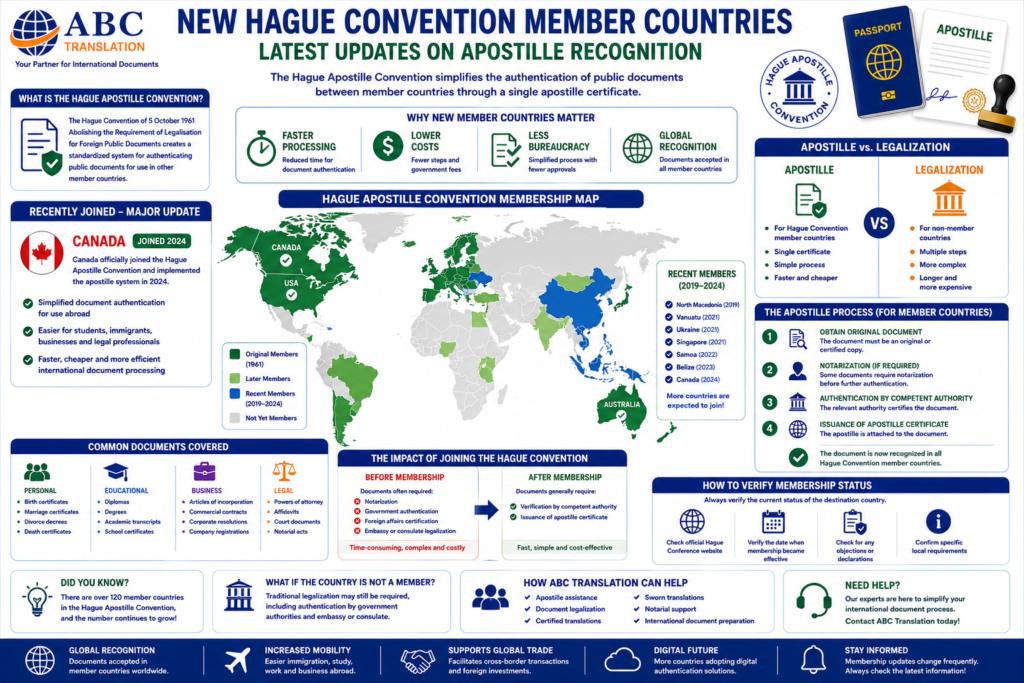
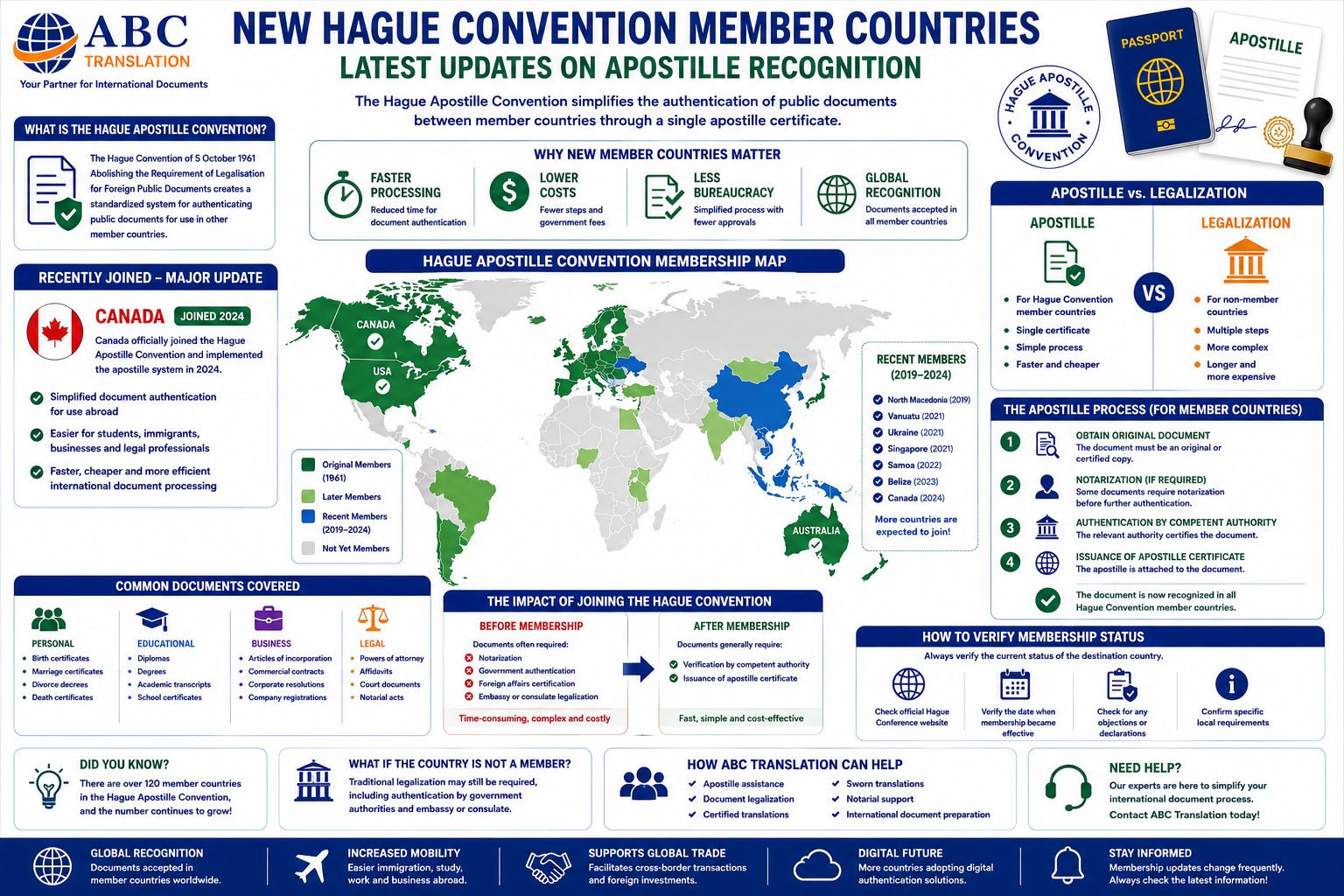
As international mobility, global business, and cross-border legal matters continue to grow, the demand for simplified document authentication has increased significantly. One of the most important developments in this area is the expansion of the Hague Apostille Convention, which allows participating countries to recognize foreign public documents through a simplified apostille process (New Hague Convention Member Countries).
For individuals, businesses, educational institutions, and legal professionals, staying informed about new Hague Convention member countries is essential. When a country joins the Apostille Convention, document authentication becomes considerably easier, eliminating the need for lengthy legalization procedures involving embassies and consulates.
What Is the Hague Apostille Convention?
The Hague Apostille Convention, officially known as the Hague Convention of 5 October 1961 Abolishing the Requirement of Legalisation for Foreign Public Documents, created a standardized system for authenticating public documents between participating countries.
Instead of requiring multiple levels of certification, member countries accept documents bearing an apostille certificate issued by a competent authority.
This system simplifies the international use of documents such as:
- Birth certificates
- Marriage certificates
- Diplomas
- Academic transcripts
- Corporate documents
- Powers of attorney
- Criminal background checks
Why Do New Member Countries Matter?
Whenever a country joins the Hague Apostille Convention, it becomes easier for citizens, businesses, and foreign organizations to exchange official documents.
Benefits include:
- Faster document authentication
- Reduced bureaucracy
- Lower costs
- Fewer government approvals
- Simplified international transactions
For people relocating, studying, working, marrying, or conducting business abroad, new member countries create significant administrative advantages.
Recent Hague Convention Membership Growth
The Hague Apostille Convention has expanded considerably in recent years.
More countries are joining because the apostille system:
- Supports international trade
- Facilitates immigration procedures
- Simplifies educational recognition
- Encourages foreign investment
- Reduces administrative burdens
As membership grows, the number of countries requiring full legalization procedures continues to decrease.
Canada’s Entry into the Apostille System
One of the most significant recent developments was Canada’s accession to the Hague Apostille Convention.
Since joining the Convention, Canadian public documents can be authenticated through the apostille process rather than more complex legalization procedures for use in other member countries.
This change has greatly simplified international document processing for:
- Students
- Immigrants
- Businesses
- Legal professionals
- Government agencies
Canada’s participation demonstrates the continuing global adoption of the apostille system.
How New Member Countries Impact Document Authentication
When a country becomes a member of the Convention, several important changes occur.
Before Membership
Documents often require:
- Notarization
- Government authentication
- Foreign affairs certification
- Embassy legalization
After Membership
Documents generally require only:
- Verification by the competent authority
- Issuance of an apostille certificate
This significantly reduces processing times and administrative complexity.
Common Documents Affected by New Memberships
Personal Documents
- Birth certificates
- Marriage certificates
- Divorce decrees
- Death certificates
Educational Documents
- Diplomas
- Degrees
- School certificates
- Academic records
Business Documents
- Articles of incorporation
- Commercial contracts
- Corporate resolutions
- Company registrations
Legal Documents
- Powers of attorney
- Affidavits
- Court documents
- Notarial acts
How to Verify Whether a Country Has Joined the Convention
Before submitting documents internationally, it is important to verify the current status of the destination country.
You should check:
- Whether the country is a member
- The date membership became effective
- Whether any objections affect recognition
- Specific local requirements
Membership updates can affect document processing requirements immediately after implementation.
What Happens If a Country Has Not Yet Joined?
If the destination country is not a member of the Hague Apostille Convention, traditional legalization procedures may still be required.
These procedures often involve:
- Government authentication
- Foreign affairs certification
- Embassy or consulate legalization
Because these steps are more time-consuming, verifying membership status before beginning the process is highly recommended.
Future Expansion of the Apostille Convention
Many experts expect continued growth in Hague Convention membership.
The increasing demand for international document recognition, global commerce, digital services, and international mobility encourages more governments to adopt the apostille system.
As additional countries join, international document authentication is likely to become even more efficient worldwide.
How ABC Translation Can Help
ABC Translation helps individuals and businesses navigate changing international document requirements.
Our services include:
- Apostille assistance
- Document legalization
- Certified translations
- Sworn translations
- Notarial support
- International document preparation
We stay informed about Hague Convention developments and can help ensure your documents meet the latest requirements.
FAQ
What is the Hague Apostille Convention?
It is an international treaty that simplifies the authentication of public documents between member countries.
Why are new member countries important?
They allow documents to be authenticated through apostilles rather than more complex legalization procedures.
Did Canada recently join the Apostille Convention?
Yes. Canada joined the Hague Apostille Convention and implemented the apostille system in 2024.
How can I check if a country is a member?
You should verify membership through official Hague Conference resources or the relevant government authority.
What if the destination country is not a member?
Traditional legalization procedures may still be required.